Privacy practices define required capabilities. Internal controls operationalize them. Maturity models measure effectiveness and maturation strategies drive continuous improvement.
Maturity models help organizations evaluate how effectively controls support privacy practices, identify gaps, and measure progress over time. Unlike policy adoption, maturity measures consistency, reliability, and institutional integration, showing not just whether a practice exists, but how well it works.
Example Maturity:
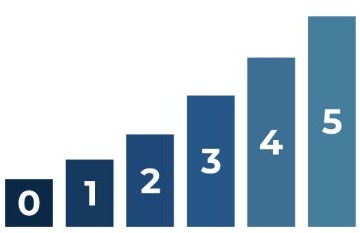
- Level 0 — Non-Existent
The practice is not implemented. - Level 1 — Ad Hoc
The practice occurs informally and inconsistently. - Level 2 — Defined
The practice is documented but inconsistently applied. - Level 3 — Consistently Implemented
The practice is formally executed and standardized. - Level 4 — Managed
The practice is measured and actively monitored. - Level 5 — Optimized
The practice is fully integrated and continuously improved.
Maturity models help organizations move beyond simply asking, “Are we compliant?” They show how well processes are working and help identify where to focus improvement efforts.
You can find individual models on each privacy practice webpage. Access these pages under Tools & Resources.
